


Cecilia on Cecilia

Updated: Aug 15
Cecilia Edefalk is certainly one of Sweden's most celebrated and widely recognized living artists, having achieved international acclaim after already enjoying tremendous success at home. Cecilia Edefalk's En annan rörelse may well be among the most recognized paintings by a Swedish artist from the 1990s onward. Back in 2015 (time flies: it was 11 years ago), we did a feature in which Cecilia Edefalk and the late artist Ulrika Sparre spoke with one another. It was high time to check in with her, which we did both with pen and lens, and in this new interview we reminisce both about our memories of her work, as well as her memories of her trajectory to this date. "I’d like to have an extensive museum exhibition with a beautiful catalogue. I am in a new and unknown phase in my studio and it might be that I need to finalise that work first" she shares on where to head from here.

C-P: Just out of curiosity: you’ve made works that are so strongly anchored in Swedish contemporary art history. They keep coming up in art contexts, being mentioned. En annan rörelse (1990) and your photographic self-portrait are examples of works that almost seem to have a life of their own. How precious are you yourself when it comes to works like that, the ones that have had a big impact and continue to do so? Are you “precious” about them, or do you let time do its thing?
C.E: It still happens that curators want to include En annan rörelse in exhibitions, even though they were made a long time ago. I just appreciate it. Those works are extremely effective–they communicate well in print and in the press. Even when the exhibition deals with completely different thematics, they always end up in the press material. They can carry an exhibition, both in terms of its promotion and how it’s remembered.
C-P: The recognition is instant, for sure. I suppose it’s natural that those are the works that get highlighted when they’re included. They’ve become bigger than their original contexts, while at the same time they’re not bigger than the whole body of work. A lot of people have probably seen them in print or online without even knowing how or where.
C.E: But not just because people have encountered images of them before. They also work in places where they haven’t been seen before, overseas as well. They are forceful as images. I’ve been pretty unconcerned about the demand for novelty. I re-use paintings and will show works that are twenty years old if I feel that they still work. The figurative ones are particularly timeless–even at the time of painting them it felt as if they could have emerged at any point in time. Sometimes I pick up older paintings and continue the work, I build on them. I don’t understand the urge for the latest, latest thing. I try to calm down students who feel that something they made half a year ago is already “too old.” If a work is powerful, it can be shown again.
C-P: I think that’s also about sustainable making as an artist, about not getting stuck in a freshness frenzy; that feeling that you have to leave something behind immediately and jump onto the next track. With En annan rörelse, you did repetitions precisely. Was that also a response to the market?
C.E: Yes, indirectly. Dad (1987/88) and Baby (1986/87) were sold the day before the opening of the show where they were first exhibited. I felt that I couldn’t produce an unlimited number of paintings like those, that contained that kind of energy, at the pace the market demanded. I repeated the motif to give the opportunity to really look at the paintings and how they were painted. I was hitting the brakes. Later on, a completely different discussions started revolving around them, but that was a point of departure: repetition as resistance.
C-P: That feels very relevant when you talk to younger artists today. What you’re describing, starting from an existing work, repeating it, making new iterations, also becomes a model for a more sustainable practice of your own. A recognition that you can’t keep forcing certain works and that kind of impact out of yourself over and over again, and that good works should be able to be shown in different contexts, by different people, over a long period of time.
C.E: You never know in the process of making whether it will become “one of those works”. Time will tell. A work like that, it persists over time and in different contexts. Curators find it and their way into it again and again. I never believed in the idea that you constantly have to be moving onto the next thing. I’ve somehow always managed to do my own thing. I simply can’t work if I lack the interest. I’ve had the possibility to resist, and the art world hasn’t had much say in the matter.
C-P: That’s interesting, that a certain kind of “agency” comes from success. That after certain institutional contexts and breakthroughs, you can also “dictate” your terms more and let the outside world adjust to
them.
C.E: I don’t think anyone can “dictate” one’s artistic practice, not even when it’s still young. What you can say is: “These are my things and they’re all that I have.” Take it or leave it. It’s a straight-forward kind of logic.

C-P: I also want to ask about your legacy. When I speak to you, I get the feeling that you don’t hold on too tightly to your legacy, but let a lot of it be up to the outside world. Do you care about how what you’ve created will live on later?
C.E: I actually bought a book called The Legacy of the Artist. It concerns how to organise things in advance of a posthumous handling of them, how to build an archive that is useful for art history. I’m not very good with the practical stuff. The galleries I work with keep and look after a lot of information. What the outside world reads into my artworks is something that I can’t control. Once a work has left me, it’s on its own course. Why would anyone try to command the reception of their work? I find it hard to grasp.

C-P: I think some artists, especially those who haven’t received the recognition they hoped for in time, can be very sentimental about their legacy, with the idea that perhaps the works will only find their proper place later. But you’re so cemented in Swedish contemporary art. No one can take that away from you.
C.E: I own what I do. I’ve exhibited at important institutions. That can’t be erased. An apparatus will carry on the legacy of what’s been created. Concerning the work I did during my time in Germany, it gets a little complicated. Several paintings were bought by a museum in Frankfurt, where I was very well-known at the time. Whenever a new director steps into an institution, what came before is not necessarily their thing. It’s immensely expensive for a Swedish institution to arrange a loan of works like those in Germany, it could amount to the whole exhibition budget. It’s a pity.
C-P: I want to go back a little to your international trajectory. Carlier | Gebauer in Berlin is your gallery, and you also have Gladstone in New York/Brussels. When did your international breakthrough happen, and what led to it?
C.E: En annan rörelse had received much critique in Sweden, partially due to them being paintings based on photographs. When they were exhibited in Germany, they caught the attention of Hans Ulrich Obrist and Kasper König (Obrist was his assistant at the time). They were organising a major exhibition titled Der zerbrochene Spiegel. They wrote me and asked for a studio visit, but when they arrived in Stockholm my studio was practically empty apart from a small, monochrome self-portrait. I felt empty. They visited other artists like Ola Billgren. I proposed Dick Bengtsson’s work at Moderna Museet. He ended up being in the show.
Later on, Bo Nilsson recommended me to apply for a scholarship at Kunstlerhaus Bethanien in Berlin. I did, and got it. I brought along that small self-portrait and started painting repetitions of the motif. I’d read interviews with the renowned museum director John Cristoph Ammann and thought to myself: “Maybe he’d like me!” but didn’t dare to contact him. It turned out he’d read a conversation between myself and a German philosopher revolving around those paintings, that was published in a small periodical. He came to the studio and wanted to acquire the entire series that had originated from that tiny self-portrait. He was very supportive. Upon my return to Sweden, I worked with Galleri Andreas Brändström. He introduced me to James Rondeau at the Art Institute of Chicago, who invited me to do a solo exhibition there. I think it was James who showed my work to his friend Barbara Gladstone. One of Barbara’s employees came to Stockholm for Shirin Neshat’s exhibition at Kulturhuset and stopped by my studio. Then I got the message: “Barbara would like to meet you”. So I went to New York. That’s how I ended up working with Gladstone.

C-P: I remember when I moved to Stockholm around 2010–11, after you had started exhibiting there, and how big it felt that a Swedish artist was represented by Gladstone specifically. How do you think working with the gallery has affected your trajectory?
C.E: For example, Gladstone in Brussels was eager to show my watercolours of flowers from 1978. It developed into a fantastic presentation. All 270 of them were originally exhibited at Nordiska Akvarellmuseet together with Hilma af Klint’s watercolours and have since the Gladstone show been exhibited in many places. The galleries come to my exhibitions and keep up to date with my work.
C-P: I’m thinking about how you’ve moved between major institutions, smaller art spaces, and some pretty unexpected rooms. I saw your exhibition Homecoming in Norrköping and I remember how strong the experience was. Norrköping Art Museum is one of the really important institutions outside Stockholm, alongside the museums in Kalmar, Västerås, and Gothenburg. All influential places with strong collections.
C.E: I grew up in Norrköping and many old friends live there. However, the opening took place at the peak of the pandemic. There were perhaps 10 people in the space. To open an exhibition to a non-existent public was an absurd feeling.
C-P: And yet that experience remains. That it happened. It’s interesting to think about how an exhibition can be so potent, but almost unseen in terms of an audience.
I also remember when you exhibited at the Crystal gallery in Parkaden many years ago, in 2012, together
with, among others, Lina Bjerneld. For me as a visitor, it felt almost unthinkable that an artist “at your level” would exhibit in a grungy parking garage, with a young gallery that had just lost its permanent space. It felt bold, playful and so unprecious. How did you see it yourself?
C.E: I liked them, they were a fun group. So thought: Why not? Lina had been a student of mine at Kungliga Konsthögskolan, though I didn’t know the gallerists Jun-hi and Katarina or how hot they were on the scene. I only brought a few small things, but they were pleased and made me feel comfortable. I could do something that didn’t “advance my career” according to some logic of sorts. It was all collegial and a possibility to contribute to a gallery and an artist that I was fond of.
C-P: For me, that sends an important signal. That someone in your position can choose to do things like that, which legitimizes similar choices for other artists who might be more anxious.
Looking ahead, what would you yourself like to happen with your practice next?
C.E: I’d like to have an extensive museum exhibition with a beautiful catalogue. I am in a new and unknown phase in my studio and it might be possible that I need to finalise that work first, crack the code. It wasn’t possible to take care of my child and to keep working to the same extent, but as he grows older I have more time on my hands. I can plan ahead.
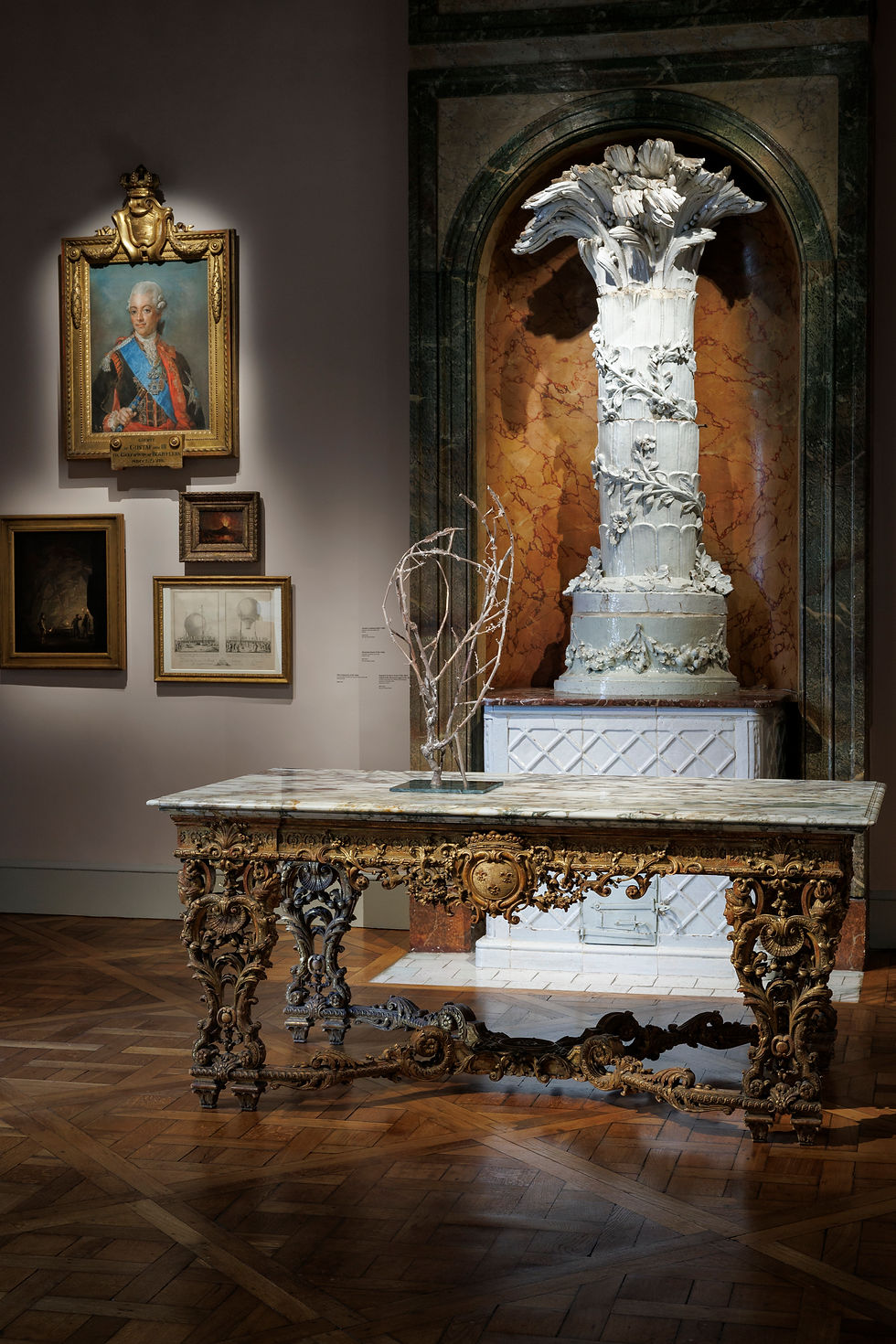
C-P: You’ve recently exhibited in Paris, at the Institut suédois, and at Dalsland Museum. Let’s talk about that.
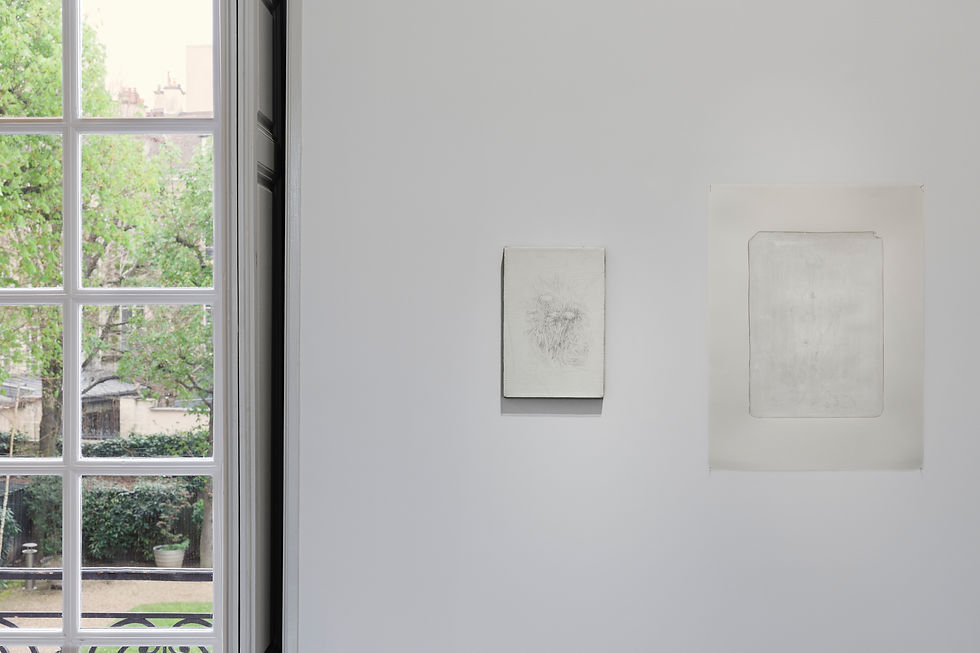
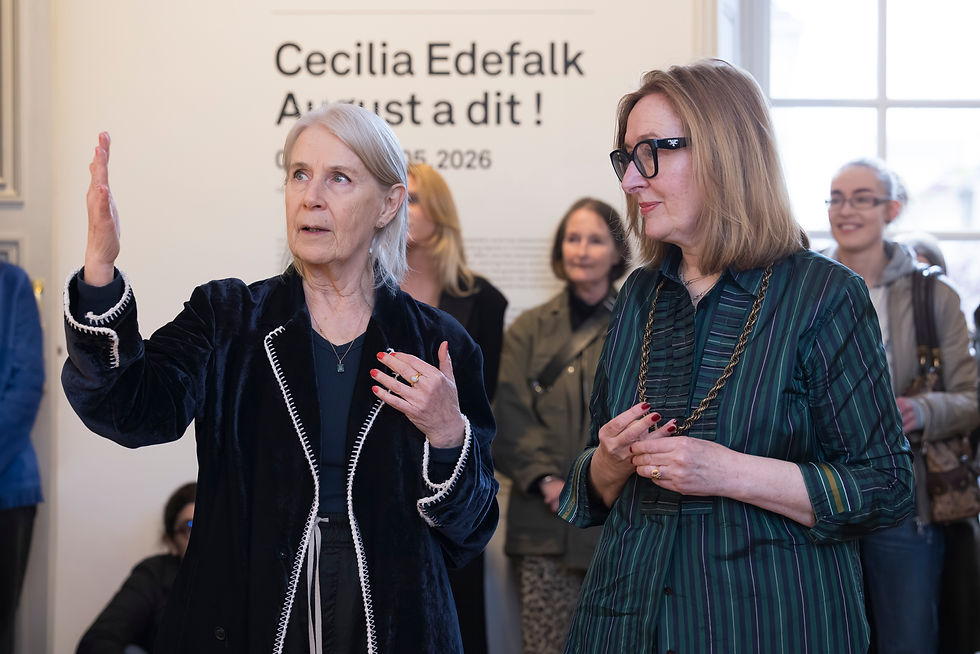
C.E: Jörgen Svensson called from Dalsland and asked if I wanted to exhibit there. They have an excellent program, with great artworks, though it’s hard to get there. A calm autumn turned into an intense winter and spring with many exhibitions around Sweden, like the one at Ystads konstmuseum and the show at Galleri Arnstedt in Båstad, which turned out beautifully. And, in the middle of it all, Sara Arrhenius called and suggested that I exhibit in Paris at Institut suédois. The room is fairly small, and I did not show one of my consistent series but rather a composition of different works. It fell into place as a lovely–and popular–show. It was my first solo exhibition in France so it felt very special.
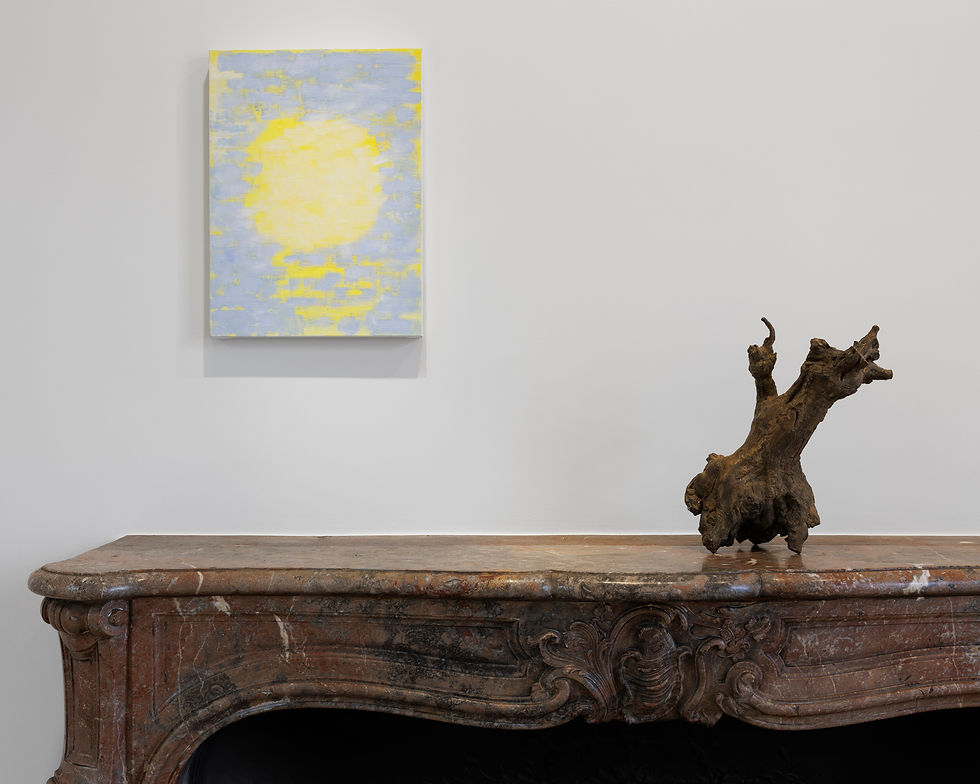
C-P: Institut suédois has been enjoying something of a renaissance. It’s long been a place for exhibitions, but with Sara Arrhenius as director it currently carries different weight. She has big ambitions, and she always has, including earlier at Bonniers Konsthall. For me it was pretty obvious that when she was leaving the Royal Institute of Art as principal, she would altogether raise the profile of the institute. Now the institute is also quite visible in the Swedish media. They work in a way where what happens there doesn’t become isolated in Paris, but is communicated back here. There’s a lot of emphasis on communication and marketing. It feels like a Swedish outpost in Paris, not just a local institution.

C-P: I’d like to hear about the film Sofia Curman made about and with you. She previously made her debut film about Lap-See Lam, where I remember the process being long, and already there it felt as though she was finding a format in which she follows artists closely, biographically. What was it like for you to be the subject of that gaze, and how did you think about saying yes?
C.E: The filming took place over the course of a year or so, in what felt like a dense period of time. It has received positive attention, some said it’s fantastic and others mean it has inspired them. Maybe it brought me a kind of popularity. I’ve been told the film and myself is congenial, that my presence in this film has comforted them. Others didn’t understand a thing! I’ve only received positive remarks but of course one never knows.
It was good for me to tell parts of my story that were unknown to most people. There are no major revelations, but we get to revisit older interviews and say: “Oh, so that’s how it was!” When Sofia first came to me, I had to know how much time she needed from me. I don’t have an unlimited amount of time. But, I liked her and trusted her. Sometimes you just have to trust that what comes along is good and follow that intuition. A good relationship with the cinematographer is of importance. Eleanor was fantastic.

C-P: I’d also like to get into something you touch on in the film which is your psychic abilities, and how you experience communication with both artworks and nature. When did that way of seeing, that relationship to the outside world, emerge? Is it something that goes back to childhood, or did it come through experiences in art?
C.E: I had it in me but it was in Germany that the sensibility was exposed to that realm, highly connected to the specific studio I had there. I made a series of square paintings in there, depicting a man and a woman and in the very centre of the painting was an anus. The painting made use of a pornographic image but really dealt with the male gaze. The centre became a portal and the mandala-like composition guided me towards Buddhism and towards levels of consciousness beyond the mere motif of the image.
When I’d returned to Sweden from Berlin, I had an experience in Tegnérlunden where I was contacted by August Strindberg. Our communication continued for some years and my notes from the conversations developed into a text and a video work. I have since then been able to “contact” other artists. I can go to a museum, look at a painting and retrieve information about under what conditions it was made.
Regarding nature: I once tried a tiny piece of mushroom, which is normally really not my kind of thing but it was done carefully. We went out into nature and first I felt nothing. Then I felt something, even if subtle. Nature appeared so much nicer than the humans, who were all shabby and dusty. I stroke the moss and it said to me “Please stroke me, we want you to see us.” And so, it opened up to me. Nature, the trees, are in my opinion our friends. They are part of larger intelligences.
Working with your spiritual awareness deepens and makes present the ability. A medium told me that my “membrane” is very thin which helps the contact. This image is useful. I think many artists have this ability. Often completely alone in the studio, we’re not guided by others but focus on what interests us. These are old news, though un-modern during Modernism when everything had to be “scientific” and masculine.


C-P: That’s an interesting image to think about: the membrane, and how some people have less “material” between themselves and something else, which makes a certain kind of perception possible. You’ve mentioned to me that you’re in the middle of a shift in your painting. A lot of people associate you with figurative works. Can you tell us more?
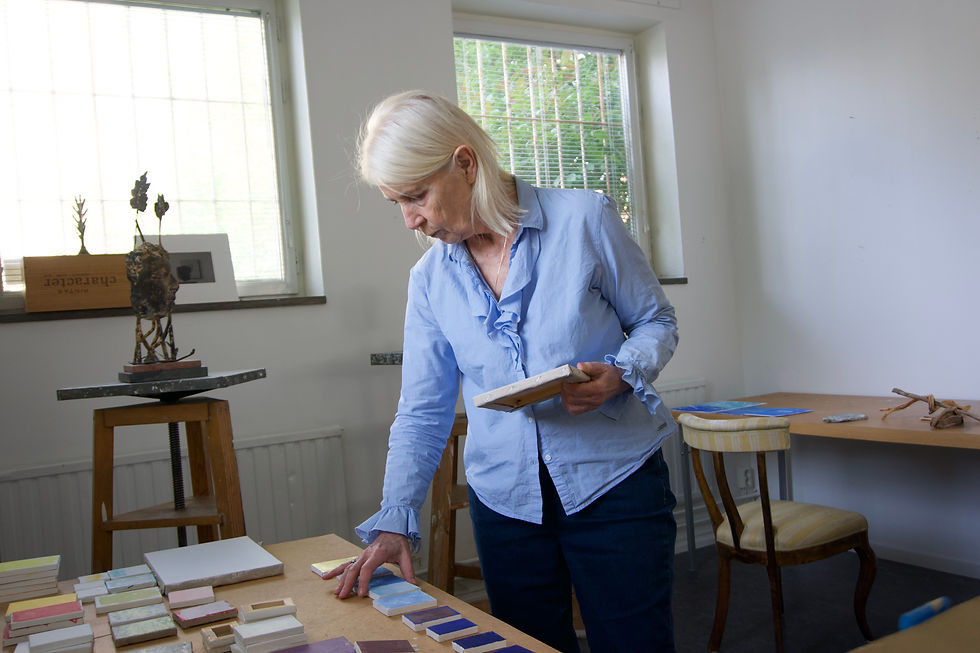
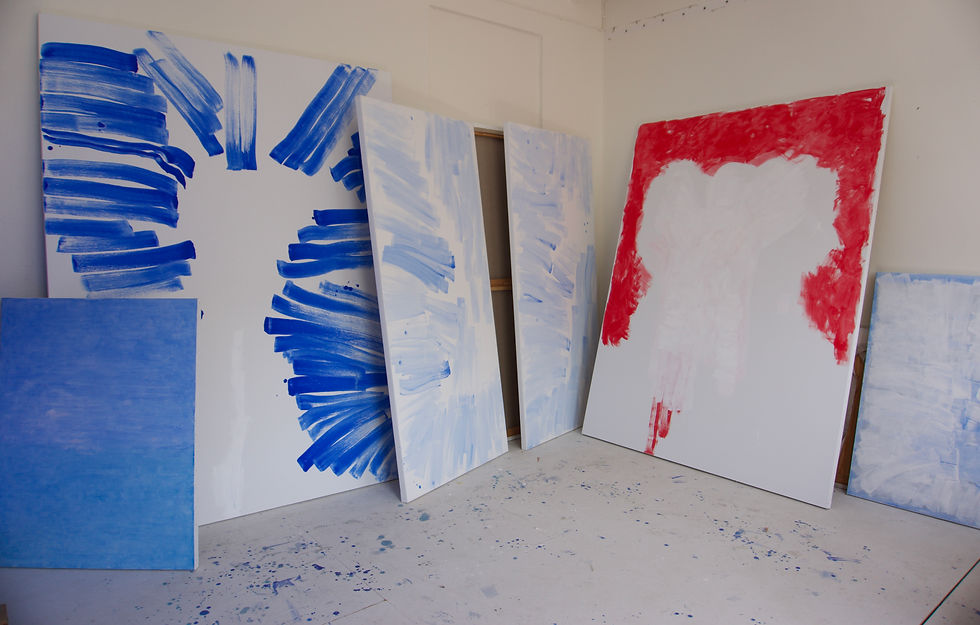
C.E: Since I stopped painting figuratively, it has become increasingly diffuse to others exactly which “type” of artist that I am. Now I just witness whatever happens when I paint and don’t think about what I paint, just being in contact with a movement, a brush, a gesture. Things appear in the paintings to be noticed afterwards, whereas before I could go into it thinking “I shall paint this person and the resemblance must be as high as possible”. These days, I don’t paint anything in particular, unless something comes along that I wasn’t aware of before. I approach it from the other direction. Now I am in the midst of this shift, so I’d actually like to refrain from saying too much. I’m on a path towards something new and I’d like to wait until it settles. Ashik Zaman Artist and studio portraits by Corina Wahlin